Power Surge Electric LLC Journal
Whole-Home Surge Protection in La Porte, TX: What It Is and Why Texas Homes Need It
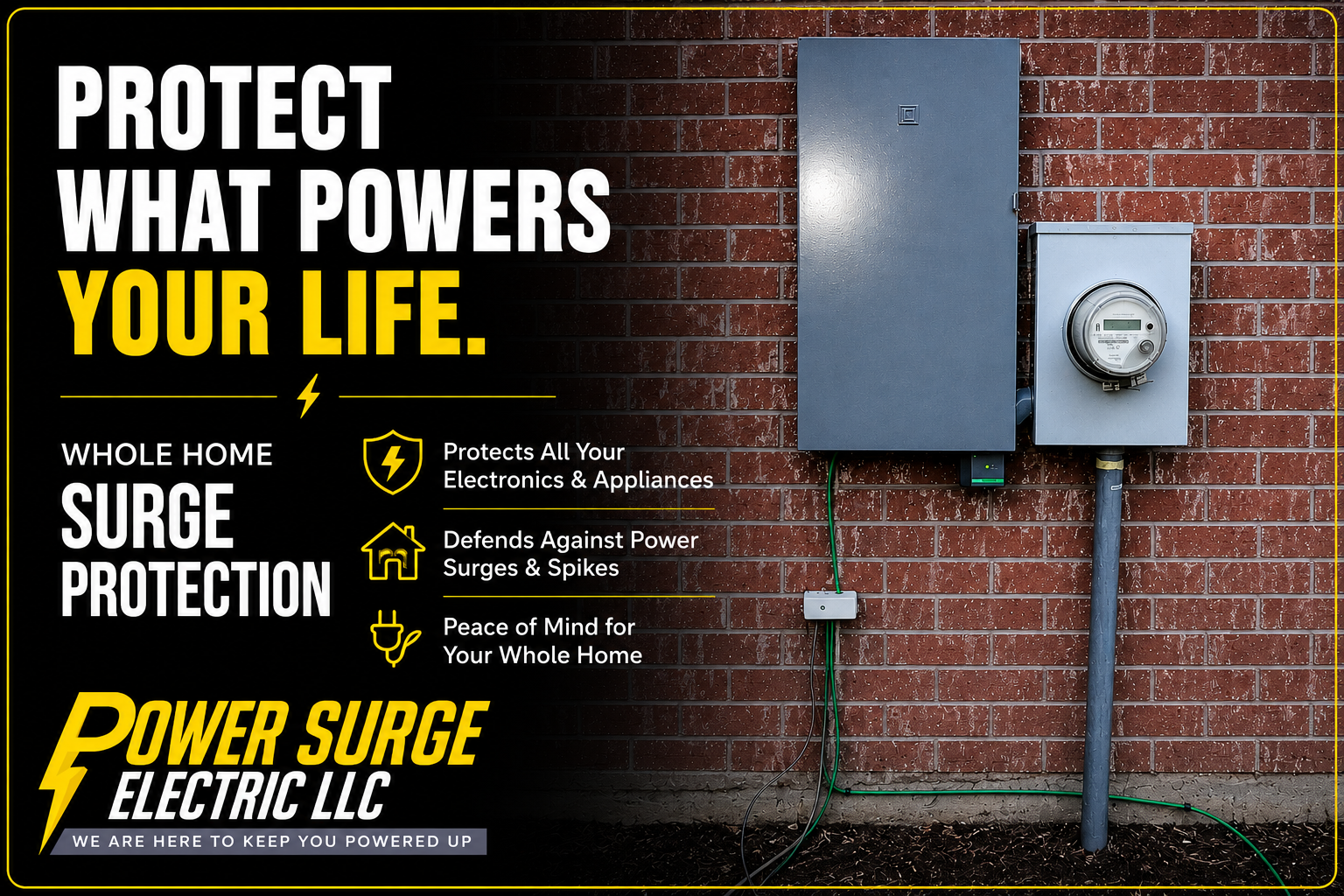
Every summer along the Gulf Coast, storm season has a way of reminding homeowners how fragile modern electrical systems really are. Lightning, high winds, and an aging grid all put stress on the power feeding your home — and the damage doesn't always show up as a full outage. Sometimes it shows up later as a dead TV, a fried HVAC board, or appliances that simply stop working.
That's where whole-home surge protection comes in. It's one of the most affordable ways to protect everything plugged into your home, yet it's also one of the most misunderstood. Here's what it actually is, what it does, and why it matters more here in Southeast Texas than in most parts of the country.
What Is a Power Surge?
A power surge is a sudden, brief spike in the voltage running through your electrical system. Your home is designed to run on a steady voltage. When that voltage jumps — even for a fraction of a second — the excess energy has to go somewhere, and it travels straight into whatever is connected.
Surges generally come from one of two places:
External (grid-side) surges — lightning strikes, downed lines, transformer issues, and utility switching as the power company reroutes electricity during or after a storm.
Internal surges — large appliances like AC compressors, well pumps, and refrigerators cycling on and off, sending small spikes back through your home's wiring.
Having spent years on the utility grid side before founding Power Surge Electric, I can tell you most homeowners only think about the dramatic lightning strike. In reality, the small, repeated internal surges are quietly wearing down your electronics every single day.
Why Texas Homes Are Especially at Risk
Southeast Texas combines almost every condition that causes surges:
Frequent thunderstorms and lightning during the long storm season
Hurricanes and tropical systems that knock down lines and force grid switching
Extreme summer heat that pushes the grid — and your AC — to its limits
An expanding grid with a lot of overhead service in our area
When the utility restores power after an outage, that moment of re-energizing can itself send a surge through the neighborhood. If your home isn't protected, your sensitive electronics absorb the hit.
Power Strips Aren't Whole-Home Protection
This is the part that surprises most people. The $25 surge strip behind your entertainment center only protects what's plugged directly into it — and only up to a limited rating. It does nothing for your:
HVAC system and furnace control board
Refrigerator, oven, and other hardwired appliances
EV charger
Garage door opener
Recessed lighting and ceiling fans
Anything wired directly into the wall
Whole-home surge protection works differently. It's a device installed at your electrical panel that intercepts surges before they branch out to every circuit in the house. Think of it as a goalkeeper at the panel instead of dozens of small defenders scattered around the home.
For the best protection, we often recommend a layered approach: a panel-mounted device for the big external surges, plus point-of-use protectors on your most sensitive electronics.
Signs Your Home May Be Taking Surge Damage
Surge damage isn't always obvious. Some warning signs include:
Electronics that fail earlier than they should
Outlets or power strips that stop working
Flickering or dimming lights, especially during or after storms
A burning smell or scorch marks near outlets
Appliances that reset or behave erratically
If you've noticed flickering or unstable power, that can point to a larger service issue worth evaluating — not just a surge concern.
What a Proper Whole-Home Surge Protection Install Includes
A surge protective device (SPD) is only as good as its installation. A proper job involves more than clipping a unit onto the panel. When we install whole-home surge protection, the work includes:
Evaluating your panel to confirm there's space and that the panel is in safe, code-compliant condition
Selecting the right SPD rating for your home's needs
Proper breaker pairing and short, direct conductor runs — surge devices work best when wired with as little extra wire length as possible
Verifying grounding and bonding, which is critical, because an SPD can only divert energy correctly if the grounding system is sound
Labeling and testing so you know it's protecting your home
This is also why surge protection pairs naturally with a panel upgrade. If your panel is outdated, a full panel and surge device installed together gives you the strongest, longest-lasting protection.
Protecting Your Backup Power Investment
If you've invested in a standby generator or battery backup system, surge protection becomes even more important. Backup systems involve sensitive electronics and transfer equipment, and a surge during a storm — exactly when your backup power is working hardest — can be costly. Surge protection helps safeguard that investment so your backup power is there when you need it.
Frequently Asked Questions
Does whole-home surge protection stop lightning? A direct lightning strike is enormous and nothing stops it completely. But a properly installed SPD diverts the vast majority of surge energy — including the far more common nearby strikes and grid surges — away from your home's circuits.
How much does whole-home surge protection cost? It's one of the more affordable protective upgrades, especially compared to replacing damaged appliances and electronics. Costs depend on your panel and whether any panel work is needed. Call for a free over-the-phone estimate.
Do I need a 200-amp panel for surge protection? Not necessarily, but the device does need a panel with adequate space that's in safe condition. If your panel is outdated, we'll talk through whether installing surge protection alongside a panel upgrade makes the most sense.
How long does a surge protective device last? Most have an indicator light showing they're active. Over time and after absorbing major surges, they can wear out and need replacement — which is far cheaper than the equipment they protect.
Will it protect my EV charger and HVAC? Yes — that's a major advantage of panel-level protection. It covers hardwired equipment that plug-in strips can't reach.
Protect Your Home Before the Next Storm
Whole-home surge protection is one of the simplest, most cost-effective ways to protect everything in your home from the power problems that come with Texas storm season. The best time to install it is before the next big storm — not after the damage is done.
If you'd like to know whether your home and panel are set up for proper surge protection, reach out to Power Surge Electric. We'll give you a straight answer about what your home needs and the most cost-effective way to do it.
Call (281) 221-9395 for a free over-the-phone estimate. Serving La Porte, Baytown, Deer Park, Pasadena, and surrounding Southeast Texas communities.
Written by Tyler Beene with first-hand expertise. AI tools may be used for research and drafting assistance, but all content is reviewed, verified, and published by the author.