Power Surge Electric LLC Journal
Is Your Home Storm-Ready? A Texas Electrician's Guide to Storm Season
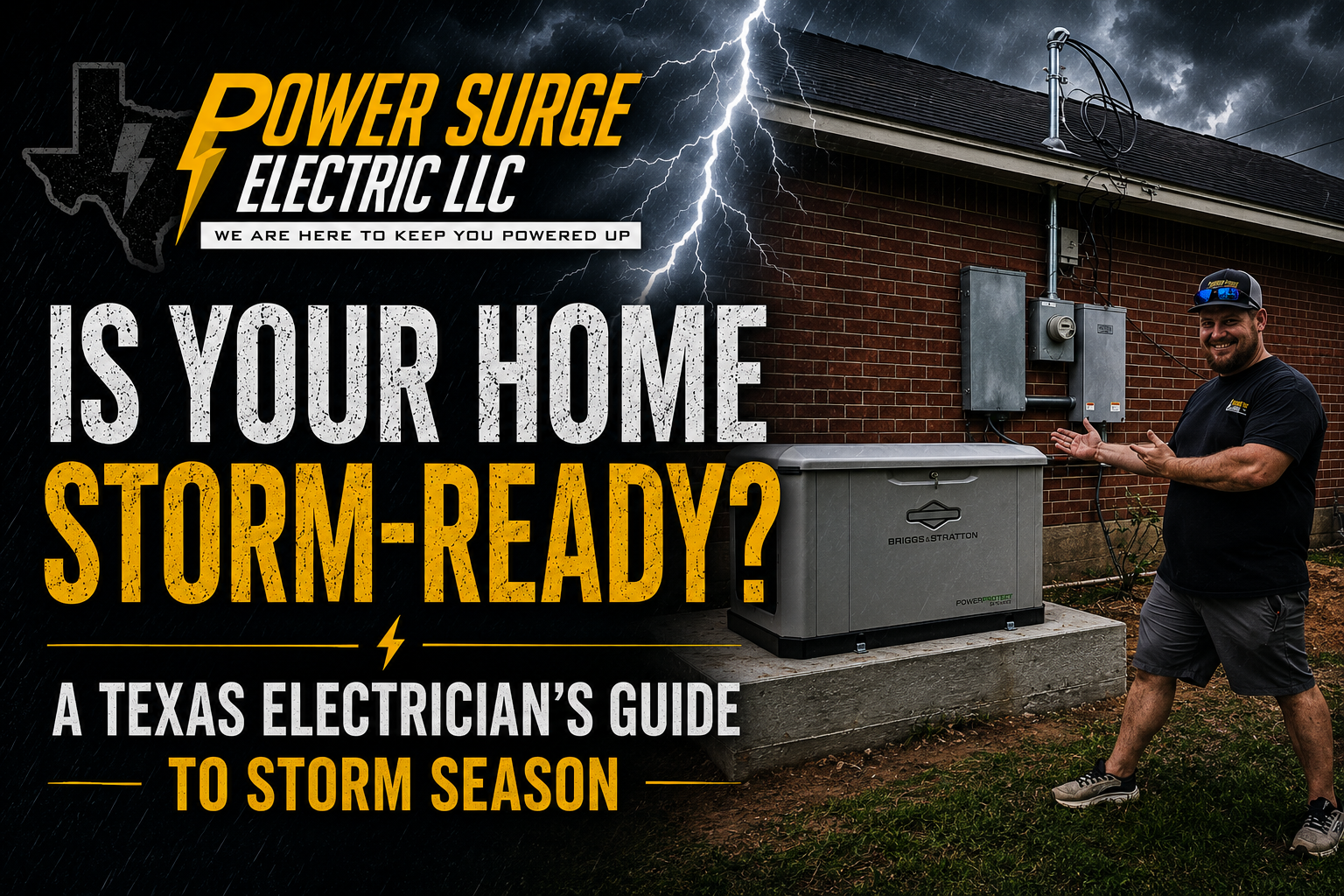
Every year in Southeast Texas, storm season tests our homes in ways the rest of the country rarely sees — hurricanes, lightning, flooding rains, and an electrical grid pushed to its limits. When the power goes out (or worse, comes back with a surge), your home's electrical system is the first thing on the line.
The good news: most storm-related electrical damage is preventable. As a Master Electrician who has worked both inside homes and out on the utility grid, I've seen what separates the homes that ride out a storm from the ones facing expensive repairs afterward. Here's how to get your home storm-ready — before the next system forms in the Gulf.
Start With the Foundation — Your Electrical Panel
Your panel is the heart of your home's electrical system, and it's where storm-readiness begins. An outdated or overloaded panel is far more likely to fail under the stress of an outage, a surge, or the sudden return of power.
Signs your panel may not be storm-ready:
Breakers that trip often, or a panel that's warm to the touch
A fuse box, or a panel more than 25–30 years old
Lights that flicker when large appliances start up
No room to add circuits for backup power or a surge device
A modern 200-amp panel gives you the capacity and the safe foundation that everything else — surge protection, a generator, backup power — connects to.
Add Whole-Home Surge Protection
Storms are the single biggest source of damaging power surges — whether from a nearby lightning strike or the grid re-energizing after an outage. A $25 power strip only protects what's plugged into it. Whole-home surge protection installs at your panel and shields everything: HVAC, refrigerator, EV charger, and all the electronics wired into your walls.
It's one of the most affordable upgrades you can make, and it pairs naturally with a panel that's already in good shape.
Plan Your Backup Power
When an outage stretches from hours into days — as Gulf Coast storms often cause — backup power keeps your food cold, your AC running, and your family safe and comfortable. There are three main paths:
Standby generator — automatic, whole-home power that kicks on within seconds. Best for long outages.
Battery backup — quiet, great for shorter outages, and pairs well with solar.
Generator plug (transfer switch) — the budget-friendly option for a portable generator, installed safely and to code.
The right choice depends on how long you need to stay powered and your budget. In every case, the key is a proper transfer switch — never backfeed a generator into your home, which is dangerous to you and to the utility crews working to restore power.
Your Before-the-Storm Checklist
Test your generator and confirm you have fuel on hand
Know how to safely shut off power if flooding threatens
Confirm your surge protector's indicator light is still active
Charge your devices and any backup batteries
Keep your electrician's number handy (that's us)
After the Storm — Signs to Watch For
Once the weather clears, watch for signs of electrical damage:
Flickering or dimming lights that persist after power returns
Outlets or appliances that stopped working
A burning smell or scorch marks near the panel or outlets
Partial power, or half the house out
These often point to service, panel, or underground wiring damage — and they're worth a professional evaluation before they get worse. If you smell burning or see sparks, shut off the power if it's safe to do so and call right away.
Why Work With a Master Electrician for Storm Prep
I spent years on the utility grid side with CenterPoint before founding Power Surge Electric, so I can quickly tell whether a problem is coming from your home or the utility. That means an honest diagnosis and the right fix the first time — not parts thrown at a symptom. For storm prep, that experience helps me set your home up to handle whatever the Gulf sends our way.
Frequently Asked Questions
When's the best time to storm-proof my home? Before storm season peaks. The worst time to discover your panel can't support a generator is the day a hurricane enters the Gulf.
Do I need all three — panel, surge, and backup power? Not necessarily. Start with a safe, capable panel, add surge protection, then layer in backup power based on your needs and budget. We'll help you prioritize.
Can you install everything at once? Yes. Bundling a panel upgrade with surge protection and a generator connection is often the most cost-effective approach, and it's done to code with permits and inspection.
How much does storm prep cost? It varies by home and how far you take it. Call for a free over-the-phone estimate and we'll give you a straight answer.
Get Your Home Storm-Ready
The best time to prepare is a calm, clear day — not when a storm is already spinning in the Gulf. If you'd like an honest assessment of where your home stands, reach out to Power Surge Electric.
Call (281) 221-9395 for a free over-the-phone estimate. Serving La Porte, Baytown, Deer Park, Pasadena, and surrounding Southeast Texas — 24/7.
Written by Tyler Beene with first-hand expertise. AI tools may be used for research and drafting assistance, but all content is reviewed, verified, and published by the author.