Power Surge Electric LLC Journal
Generator vs Battery Backup: Choosing the Right Backup Power Before the Next Storm
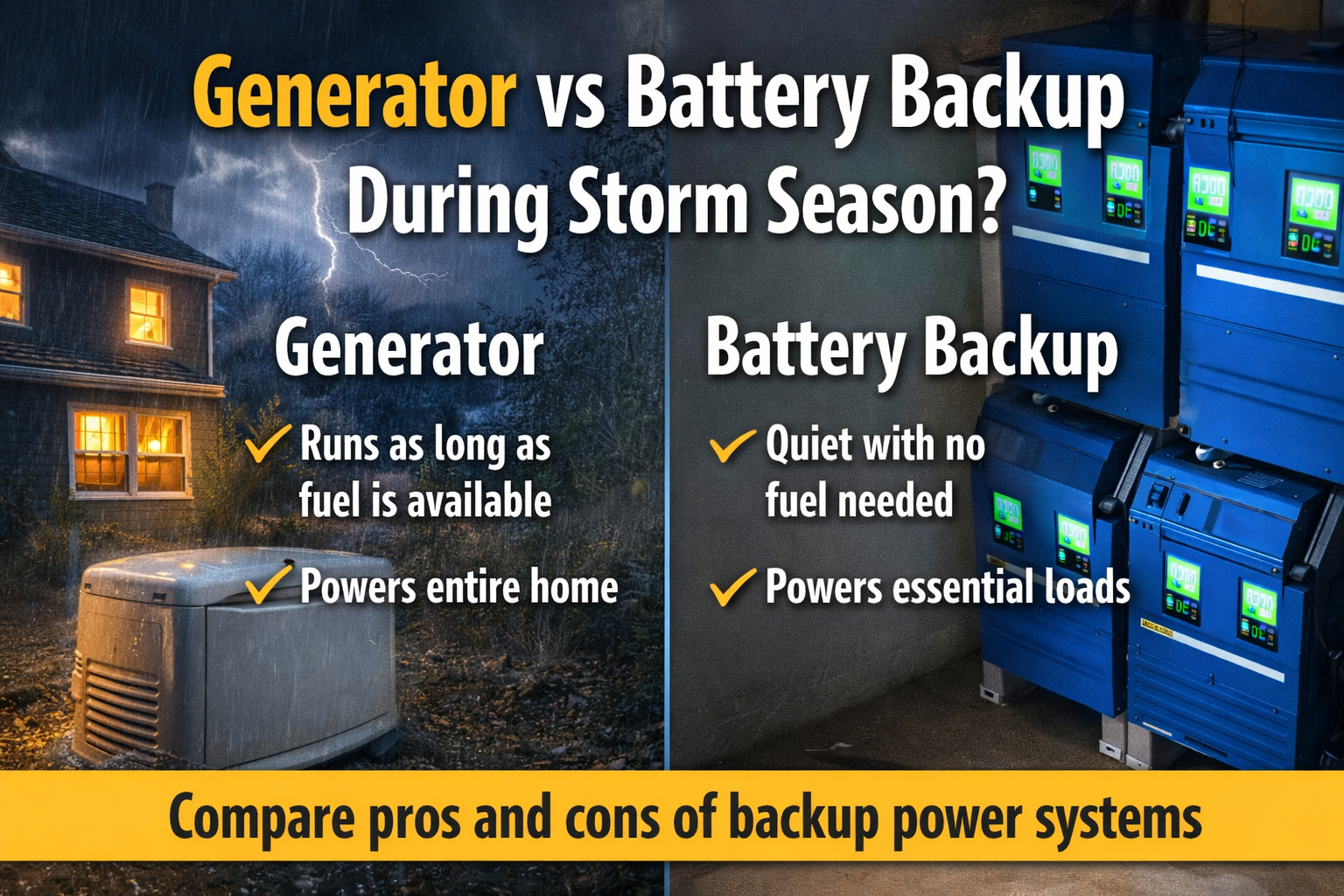
Storm season has a way of exposing how dependent modern homes are on electricity. Air conditioning, refrigeration, internet, medical devices, and even basic lighting all stop working the moment the grid goes down.
That is usually when homeowners start asking the same question. Should I choose a generator or a battery backup system?
The right answer depends less on brand names and more on how your home needs to function during an outage. Both generators and battery systems have real advantages and real limits, especially during storms.
Why Storm Season Forces This Decision
Most homeowners do not think about backup power until they have already lost it once. Storm related outages tend to be:
Less predictable
More frequent
Longer in duration
The goal is not just having power, but deciding what needs to stay on, for how long, and with how much involvement from you during the outage.
What Storm Outages Actually Demand From Backup Power
Storm outages stress backup systems differently than short, isolated outages. Key factors include:
Outage length measured in hours versus days
Heat and humidity, especially in Texas
Critical loads such as refrigerators, medical devices, internet, and lighting
Manual versus automatic operation
These realities matter far more than marketing claims.
If you are evaluating options, start with a clear understanding of how backup power services are designed to function during extended outages.
How Battery Backup Performs During Storm Outages
Battery backup systems have grown in popularity for good reason. They solve certain problems very well.
Where Batteries Perform Well
Battery systems:
Turn on instantly and automatically
Operate silently during storms
Do not rely on fuel delivery or storage
Work well for essential circuits
For shorter outages, or homes that only need limited backup power, batteries can be a clean and convenient solution.
You can review how battery and generator systems are integrated through our backup power services page.
Realistic Limits Homeowners Should Know
This is where expectations matter.
Battery systems:
Have finite runtime
Drain quickly when powering high demand loads
May struggle during extended outages if recharge options are limited
For most homes, batteries are not designed to power everything indefinitely. They work best when planned around what truly needs to stay on, not every circuit in the home.
How Generators Perform During Storm Outages
Generators are built around runtime and capacity, which becomes important during long or repeated outages.
Portable Generators in Storm Conditions
Portable generators:
Require manual setup
Depend on fuel availability
Are well suited for powering select circuits
Work best when installed with a proper inlet and interlock or transfer switch
Professional installation ensures safe integration with your electrical system. This type of work falls under our backup power services.
Standby Generators in Storm Conditions
Standby generators:
Start automatically when power is lost
Are designed for extended outages
Can power most or all of a home
Require professional planning and installation
For homeowners who experience long outages or want hands off reliability, standby generators are often the most dependable option. Proper system sizing and integration are critical to long term performance.
Generator vs Battery During Extended Storm Outages
This is where the differences become clear.
Batteries prioritize convenience and quiet operation but are limited by stored energy
Generators prioritize runtime and capacity but require fuel and maintenance
During multi day outages, generators typically maintain power longer. During short outages, batteries offer seamless performance without noise or fuel concerns.
Neither system is better in every situation. They solve different problems.
Homes Without Natural Gas
In areas without natural gas service, running fuel based generators can be more complex or expensive. In these cases:
Battery systems can be a strong alternative
Expectations must still be realistic
Load planning becomes especially important
For some homeowners, batteries provide enough coverage without the logistics of fuel delivery or storage.
If you are unsure what makes sense for your home, a consultation through our backup power services page is a good starting point.
Installation and Planning Matter More Than Equipment
Storm season failures often trace back to poor planning, not bad equipment.
A proper backup power installation includes:
Electrical load evaluation
Panel compatibility review
Safe system integration
Grounding and bonding verification
Permits and inspections
In some cases, a panel upgrade is needed to safely support backup power systems.
How to Decide Before the Next Storm
Before choosing a system, ask yourself:
How long do outages usually last in my area
What absolutely needs to stay powered
Do I want automatic or manual backup
Do I have access to fuel or gas service
Is this short term protection or long term planning
Answering these questions honestly leads to better outcomes than chasing the largest or most advertised solution.
If you are located in the local area, you can review our service coverage for:
Why Professional Guidance Matters
Choosing backup power is not about buying equipment. It is about designing a system that works when conditions are at their worst.
At Power Surge Electric, we help homeowners compare generators and batteries realistically based on:
Their electrical system
Their outage history
Their expectations
You can learn more about our approach on the About page or schedule directly through our booking page.
Preparing Before the Next Storm
Storm season is not the time to experiment with backup power. Planning ahead allows you to:
Choose the right solution calmly
Avoid rushed decisions
Install systems safely and correctly
If you are weighing backup power options and want clear guidance, visit our backup power services page or reach out through our contact page.
If you would like next, I can generate:
A search optimized meta description
An internal linking structure map connecting this post to panel upgrades and underground wiring
A comparison table section formatted in markdown for Contentful
A featured image concept for this article
Written by Tyler Beene with first-hand expertise. AI tools may be used for research and drafting assistance, but all content is reviewed, verified, and published by the author.