Power Surge Electric LLC Journal
Flickering Lights After a Storm? Here’s What May Be Happening
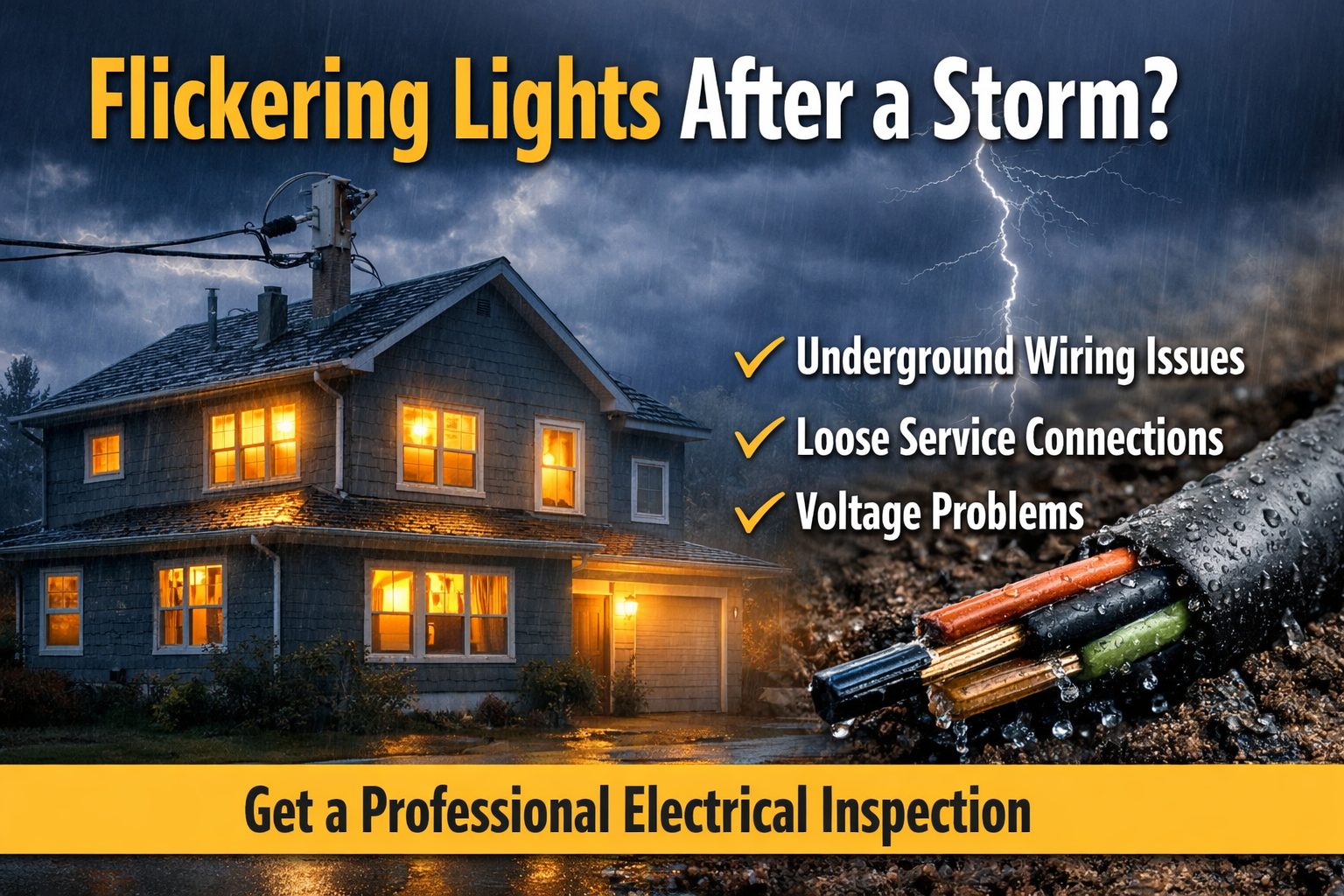
After a strong storm, many homeowners notice the same thing: lights flickering, dimming, or behaving inconsistently. Sometimes it’s subtle. Other times, it affects the whole house.
It’s easy to assume this is just a temporary utility issue, but flickering lights after a storm often point to electrical problems that don’t fix themselves. They are not always simple or inexpensive to resolve.
Understanding what may be happening helps set realistic expectations before calling an electrician.
Why Storms Often Trigger Flickering Lights
Storms stress electrical systems in ways that normal daily use does not. High winds, heavy rain, saturated soil, and sudden load changes can expose weak points that were already there.
In many cases, the storm did not create a brand new problem. It revealed one.
Underground Electrical Wiring Issues
One of the most common causes of flickering lights after storms is underground electrical wiring.
Underground wiring is exposed to:
Moisture intrusion
Soil movement and settling
Temperature changes
Insulation breakdown over time
After heavy rain, moisture can get into compromised underground wiring and cause intermittent voltage issues. These problems often show up as:
Lights flickering throughout the house
Issues that come and go
Problems that worsen during or after wet weather
Because the wiring is buried, these issues are out of sight and easy to misdiagnose.
If underground wiring is the cause, repairs may involve trenching, service repulls, or full replacement depending on the condition of the conductors.
Overhead Service Mast and Connection Problems
If your home has an overhead electrical service, storms can also affect the service mast and connection points.
High winds and movement can loosen or damage:
Connections at the weatherhead
Service conductors
Mast hardware
Even small changes in these connections can cause voltage fluctuations that result in flickering lights. These issues do not always cause a full outage. They often create unstable power, which is harder to pinpoint without proper inspection.
If damage is found, repairs may fall under service upgrades depending on the condition of the mast, meter base, and conductors.
Loose or Compromised Electrical Connections
Storm related flickering can also be caused by loose connections inside the electrical system, including:
Service conductors
Panel connections
Grounding and bonding points
When connections are already marginal, storm conditions can push them past the point where they operate reliably.
In some cases, homeowners discover these issues while planning panel upgrades or other system improvements.
When It’s Not the Utility Company
Many homeowners assume flickering lights are always a utility problem. In reality, responsibility is often split.
In most local service areas, the utility owns the meter, but the wiring feeding the home, whether overhead or underground, is often the homeowner’s responsibility.
That is why it is common for the utility to confirm power is available while flickering issues continue inside the home. When that happens, a professional evaluation through a licensed electrician becomes necessary.
You can learn more about our general electrical services if you are unsure where the issue falls.
Why Flickering Lights Are Rarely a Quick Fix
Flickering lights after a storm usually require diagnostic work, not just part replacement. The issue may involve:
Underground wiring evaluation
Service entrance inspection
Electrical testing
Tracing circuits to identify voltage drops
Because these problems are often intermittent, they can take time to locate correctly. Quick guesses or temporary fixes often lead to repeat problems and additional expense.
In some cases, unstable service wiring also affects backup power systems, especially if a generator or transfer equipment is involved.
Why This Matters Beyond the Lights
Unstable power does not just affect lighting. Flickering caused by voltage issues can:
Damage appliances and electronics
Affect HVAC systems
Interfere with generator or battery systems
Signal larger electrical safety concerns
These issues frequently surface when homeowners plan upgrades like panel replacements or generator installations. Addressing the root cause early helps avoid compounding problems later.
What a Professional Evaluation Looks Like
A proper evaluation for flickering lights after a storm may include:
Visual inspection of service equipment
Testing voltage and connections
Evaluating underground or overhead wiring
Identifying whether repair or replacement is needed
The goal is to identify the root cause, not just treat symptoms.
Homeowners in La Porte, Baytown, and Deer Park often experience these issues after heavy storms due to soil movement and aging service wiring.
When You Should Have Flickering Lights Checked
You should consider having an electrician evaluate flickering lights if:
The issue started after a storm
Lights flicker throughout the house
Problems get worse during rain
Flickering comes and goes unpredictably
These are signs the issue is likely tied to service wiring or connections, not just a fixture or switch.
You can schedule a professional evaluation directly through our booking page.
Why Homeowners Call Power Surge Electric
At Power Surge Electric, we help homeowners diagnose flickering light issues with a methodical, safety first approach.
We focus on:
Identifying the real cause
Explaining what we find clearly
Recommending repairs that make sense long term
Our goal is to solve the problem correctly, not temporarily.
Schedule an Electrical Evaluation
If your lights have been flickering since the last storm, it may be time to have your electrical system checked. A professional evaluation can help determine what is happening and what it will realistically take to fix it.
Visit our contact page or schedule directly through our online booking system to get clear answers before the issue gets worse.
If you would like, I can now generate:
A meta description optimized for search
An SEO title variation
Suggested internal anchor text variations for future posts
A content cluster plan around underground wiring and storm damage
Written by Tyler Beene with first-hand expertise. AI tools may be used for research and drafting assistance, but all content is reviewed, verified, and published by the author.